The crossing
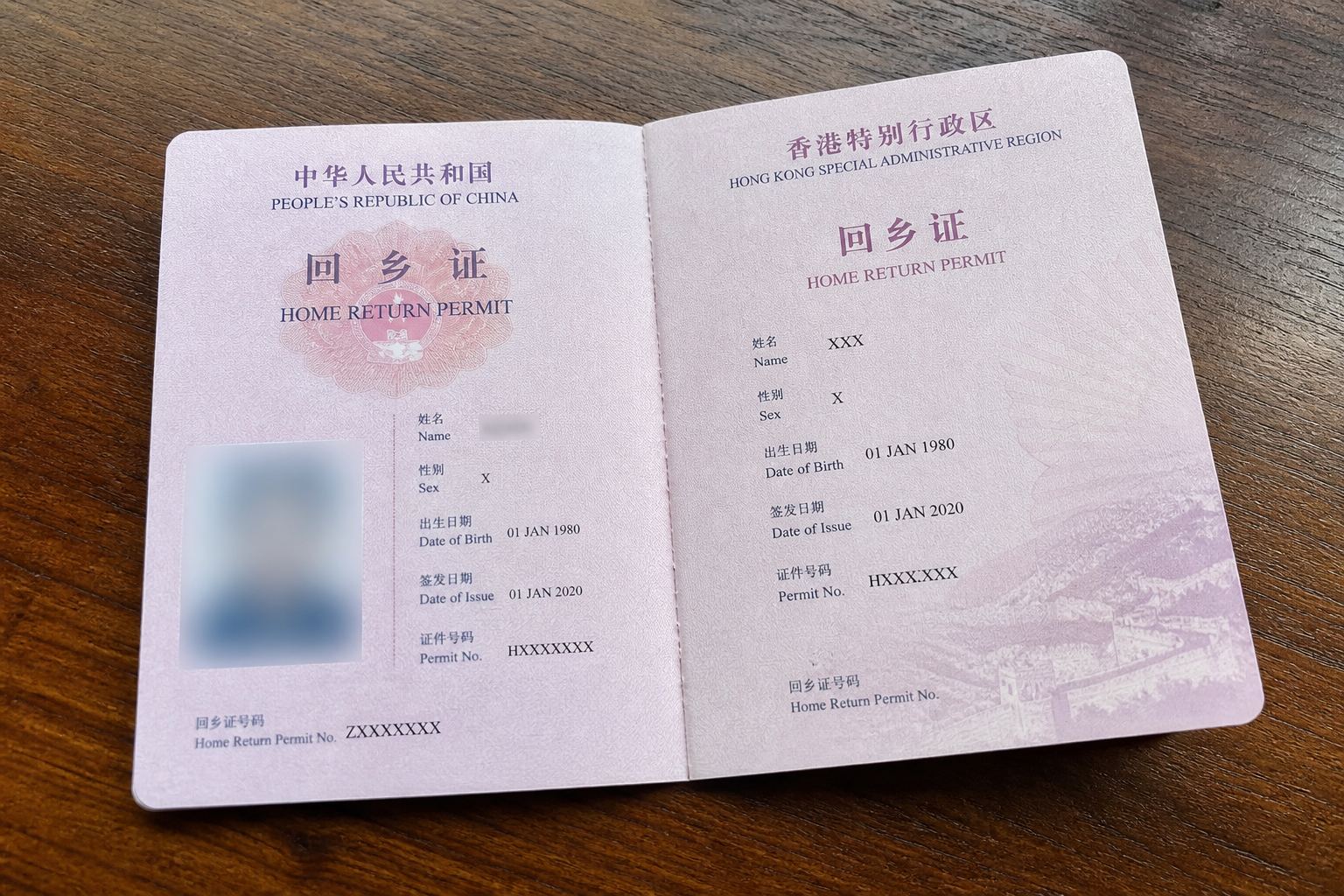
Your Home Return Permit
Updated 6 September 2026
The Home Return Permit is the card Chinese-national Hong Kong residents use to cross into the mainland. It's only issued to Hong Kong residents who hold Chinese nationality. If you're a permanent resident but not a Chinese citizen, this isn't your document, and you'll be dealing with a mainland visa attached to your passport instead, not the renewal process below.
What the card actually is
The Home Return Permit, 回鄉証 in Chinese, is formally the Mainland Travel Permit for Hong Kong and Macao Residents. It's issued by the Exit and Entry Administration under the Ministry of Public Security, though in practice you never deal with that office directly. You apply through China Travel Service (CTS), which runs the counters on the Hong Kong side.
It covers tourism and business trips into the mainland. It doesn't cover employment. Taking up a job there needs a separate work permit process entirely.
Who actually needs one
If you're a Hong Kong resident of Chinese nationality, meaning you haven't formally declared foreign nationality to the authorities, you're eligible, and you'll want one even if you also carry a foreign passport. Kids need their own permit too, not a listing on a parent's document, and theirs runs on a shorter five year cycle instead of the usual ten.
Non-Chinese-citizen residents, British passport holders who never took up Chinese nationality, domestic helpers, and so on, use a different route into the mainland involving a visa attached to their actual passport. That process and its costs sit outside what this page covers.
How it's different from your passport at the border
At every land crossing into Shenzhen, whether that's Lo Wu, the Lok Ma Chau Spur Line into Futian, Huanggang, Shenzhen Bay, or Heung Yuen Wai, Chinese-national Hong Kong residents present the Home Return Permit, not a passport. Your passport is for flying somewhere else entirely. Pulling it out at a mainland immigration counter here just slows you down while the officer sends you back to find the permit instead.
Plenty of permanent residents aged seven and up can now register for the mainland's e-Channel self-service lanes, which read the permit alongside your Hong Kong ID card and wave you through without an officer checking by hand. It's worth registering once if you cross often, it shaves real minutes off a Friday evening queue. If you're not sure which crossing actually suits your route or timing, the crossing comparison tool filters all five by hours and typical crowding so you're not guessing at the MTR platform.
Renewal basics
The permit runs for ten years if you're 18 or over when it's issued, five years if you're under 18. If regular Shenzhen trips for you means a monthly stock-up run to one of the Sam's Club stores, keeping this card current matters more than it does for someone crossing twice a year, since a lapsed permit means the whole trip is off.
Renewal goes through CTS, either online through their portal or the ImmD app, or in person at one of five service centres: Wan Chai, Cheung Sha Wan, Kwun Tong, Fo Tan, and Tuen Mun. July and August are the worst months for booking slots, families renewing ahead of school holiday trips snap up appointments fast, so try to book two to three months out.
| Service | Where the figure lives |
|---|---|
| Standard or express renewal in Hong Kong | China Travel Service publishes the current fee and working days. Read their page the week you book. |
| Emergency temporary permit in Shenzhen | The mainland exit-entry desk or a CTS control-point counter will quote it. We will not invent that number here. |
If you lose it while you're in Shenzhen
This is the scenario nobody plans for and everybody panics about. Your first stop is a local police station, a 派出所, to file a loss report and get a certificate confirming it. You'll need your Hong Kong ID card for this since you obviously no longer have the permit itself. Which station covers you depends on where you are, near Luohu it's generally the Nanhu sub-district station on Yanhe South Road, though it's worth asking locally since coverage boundaries do shift.
With that loss certificate in hand, head to the Shenzhen Public Security Bureau's Exit-Entry Administration, or a CTS office, there are ones near Luohu, Futian, Shenzhen Bay, and Huanggang, and apply for a temporary travel permit. Bring two photos, or pay a small extra fee to have them taken on the spot. Apply in the morning and it's often ready that same afternoon, or apply in the afternoon and collect the next day. That temporary document lets you cross the border once within the following three months, which is enough to get you home.
Huanggang is the only port that runs 24 hours, so it tends to be the crossing with the most flexible surrounding services if this happens to you late at night or you can't reach a Luohu or Futian counter during normal daytime hours. Once you're back in Hong Kong, the temporary permit doesn't replace your actual card. You still need to book a proper appointment with CTS for a full replacement.
Getting across the border with a valid permit is really just step one of a Shenzhen trip that goes smoothly. What trips people up next is almost always money, since Octopus doesn't work at most mainland shops the way it does on the MTR, so it's worth reading the payments guide before you're standing at a checkout wondering why your card just got declined.
Quick answers
- Can I use an HKSAR passport instead?
- The mainland still wants the home-return document for this trip. Do not invent a workaround at the glass.
- What if I lose it?
- See the lost-permit page. ImmD 1868.
Hours, fares, and rules move. Check ImmD, C&ED, or the operator the morning you travel.