Once across
How to actually pay
Updated 28 September 2026
A lot of Hong Kong residents still cross the border assuming their Octopus card works in Shenzhen roughly the way it works on the MTR, and that cash is the reliable fallback when the tech doesn't cooperate. Both halves of that assumption are out of date. Octopus barely functions once you're past the ticket gates, and cash has quietly become the awkward option rather than the safe one.
WeChat Pay HK and Alipay HK do most of the work now
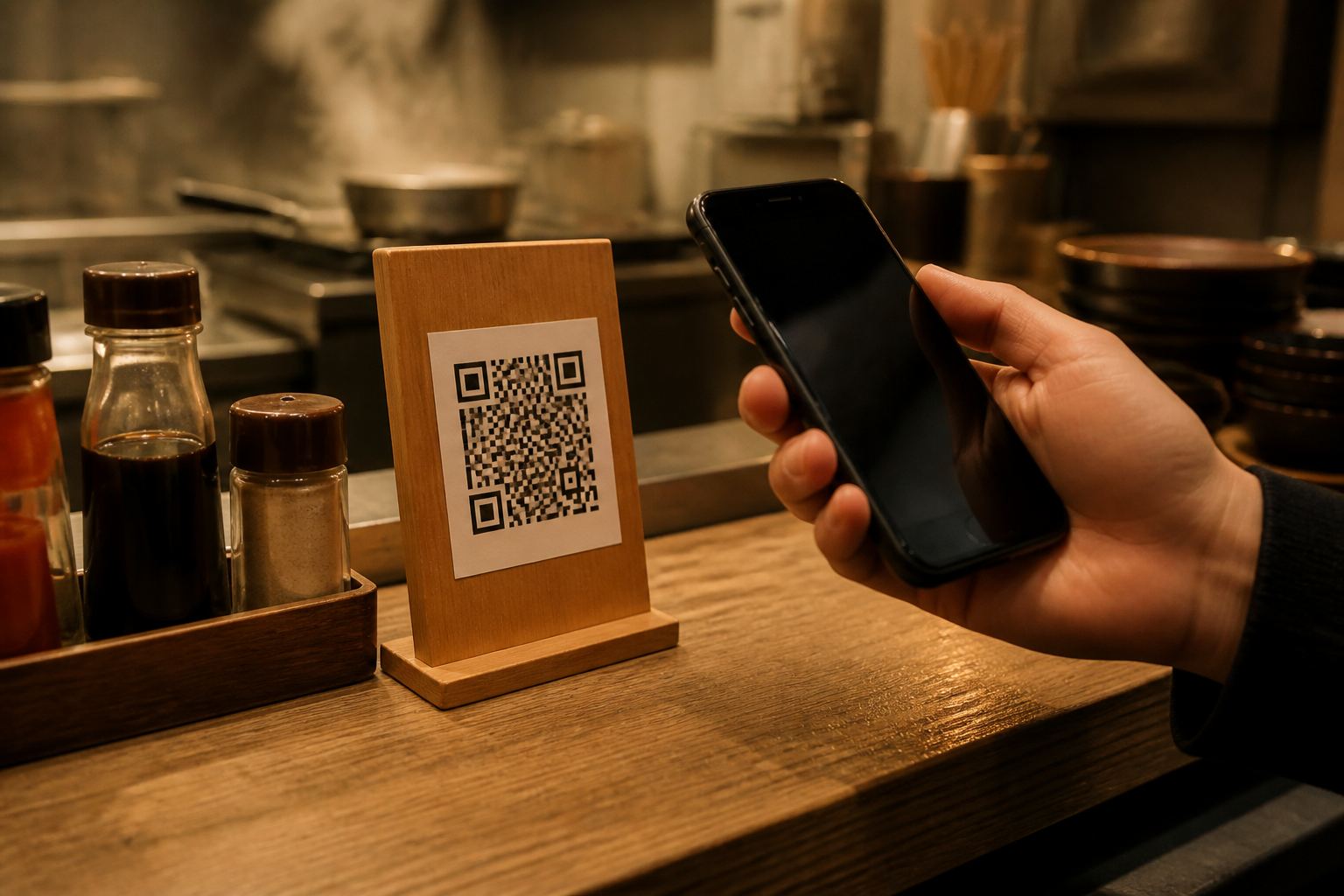
The real shift happened in December 2024, when WeChat Pay HK widened its cross-border merchant coverage beyond big chains and shopping malls to small and micro merchants across the mainland. That expansion is why taxis in Shenzhen now take it: you scan the driver's code, the fare converts from RMB to HKD automatically, and you're not fumbling for change. Alipay HK runs on a similar arrangement through Alipay's mainland network, letting you link a Hong Kong card or spend from your account balance while the app handles the conversion at checkout.
What makes this different from the old "tourist e-wallet" workaround is that these apps now sit on the same cross-border rails as domestic Alipay and WeChat Pay users, not a bolted-on foreigner scheme with limited acceptance. Corner shops, noodle stalls, convenience chains like Meiyijia, and most taxi drivers will take one or the other without blinking. If a driver's code doesn't scan for some reason, try the other app before assuming it's a lost cause. One of them almost always works.
Where Octopus still helps, and where it stops
Octopus keeps a narrow, genuinely useful role: it works for public transport under the T-Union cross-border arrangement, which covers Shenzhen Metro along with public transport in many mainland cities. Octopus publishes a cross-border transit fee on its own site — read that, not a number we invent here. Outside transit gates, don't count on it. Retail acceptance of Octopus on the mainland is essentially nonexistent.
If you ride the Shenzhen Metro often, it's worth knowing about Hu Tong Xing, a duo-purse card sold only in Shenzhen that combines an Octopus HKD purse with a separate Shenzhen Tong RMB purse on one physical card. Shenzhen Tong lists it at RMB 68 a card. It's a transit tool, not a shopping tool, but if your routine is walk across at Lo Wu or Futian and hop straight on the metro, it removes some of the top-up hassle.
| Method | Where it works | Typical cost | Best for |
|---|---|---|---|
| WeChat Pay HK | Taxis, small shops, restaurants, most retail | No stated conversion fee, RMB to HKD auto-converted | Daily spending, taxis |
| Alipay HK | Same broad mainland network as above | Conversion handled at checkout, funded by linked HK card or balance | Daily spending, backup to WeChat Pay HK |
| Octopus (T-Union) | Shenzhen Metro and other mainland public transport | Octopus publishes the cross-border fee | Transit only |
| Contactless Visa, Mastercard, UnionPay, Amex or JCB card | Every Shenzhen Metro gate since 10 September 2026, some bigger shops | Not stated by Shenzhen Metro, check your bank's foreign currency charge | Metro rides |
| Cash (RMB) | Wet markets, some stalls, backup everywhere | No fee, but you need RMB on hand | Backup when a QR code won't scan |
Bank cards sit somewhere in between. UnionPay debit and credit cards are widely accepted at bigger retail, and this matters if you're doing a proper stock-up run at Sam's Club in Shenzhen, where checkout lanes handle cards, WeChat Pay, and Alipay without fuss. It's the small, one-person stalls where cards and even the e-wallets sometimes hit a wall. The metro is now the easy place to tap a card. Shenzhen Metro says that since 10 September 2026 every gate on all 17 lines takes contactless UnionPay, Visa, Mastercard, American Express and JCB cards, or a phone with the card added, as long as small no-PIN payments are switched on for the card. The system converts the currency and deducts the fare. Shenzhen Metro says nothing about fees, so check what your bank charges on foreign currency spending.
When cash still earns its keep
Wet markets and small street stalls are where things get inconsistent. A lot of these vendors run off a personal collection QR code rather than a proper merchant account, and personal codes don't always play nicely with cross-border wallets or hit daily transaction caps quickly. China's cash acceptance rule, in force since February 2026, requires physical merchants to take cash, so you're never legally stuck. In practice it just means carrying a modest amount of RMB, say two or three hundred yuan, so a stubborn QR scanner doesn't ruin your morning market run.
Cash also earns its keep at the odd stall that hasn't upgraded its terminal, or when your phone battery dies at the worst possible moment near whichever crossing you used to get in. It's a backup now, not a default.
Treating cash as a main payment method makes less sense every year that WeChat Pay HK and Alipay HK widen their coverage. It still earns its keep as a backup, a couple of hundred RMB folded away for the one stall or one dead phone battery that catches you out. If you're carrying more than a backup amount for a specific purchase, check the customs allowance page for the HK$120,000 cash declaration threshold before you cross back.
Quick answers
- Does my Hong Kong Visa card just work?
- Bigger shops, sometimes. The stall, no. Shenzhen Metro gates, yes: since 10 September 2026 every gate takes contactless Visa, Mastercard, UnionPay, American Express and JCB cards with small no-PIN payments switched on. For shops and stalls, the wallet apps are the plan.
- Do I need a mainland bank account?
- Not for a day trip if the HK wallets are working.
Hours, fares, and rules move. Check ImmD, C&ED, or the operator the morning you travel.