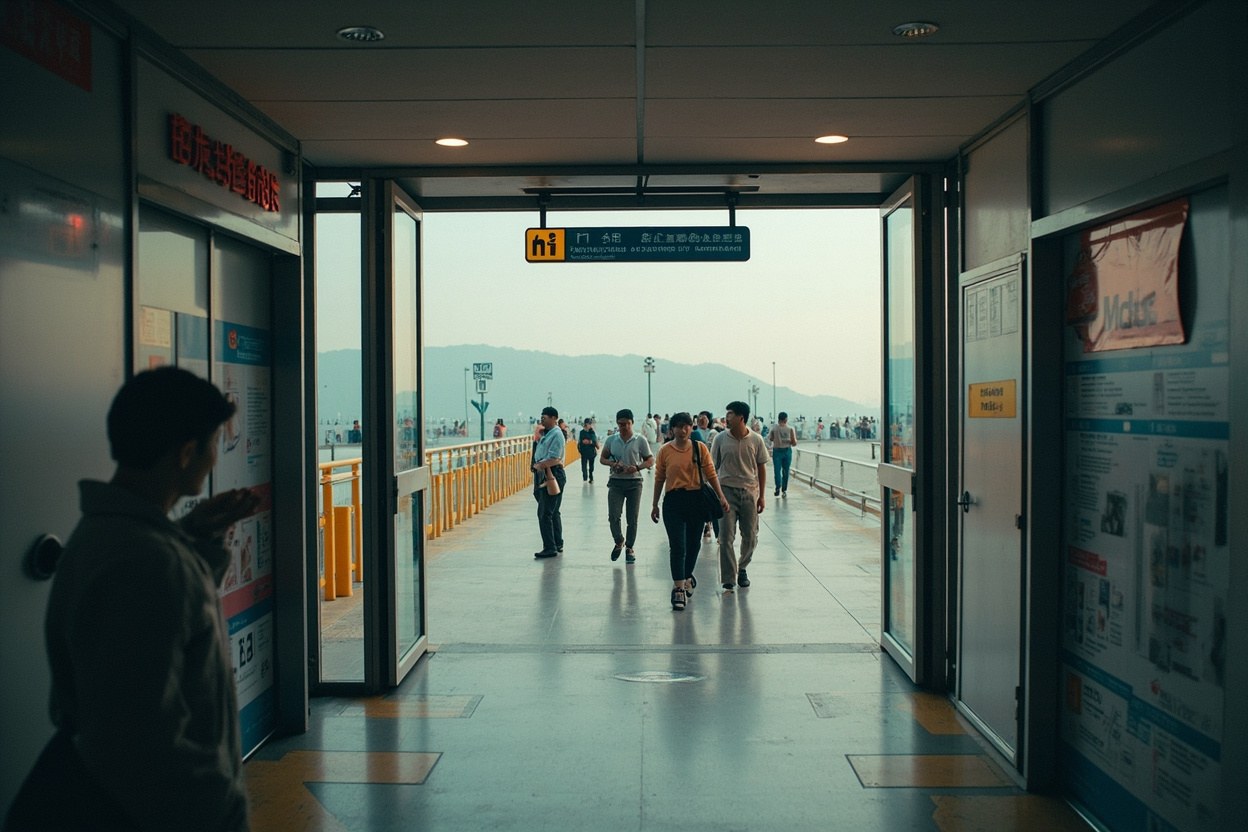
Once across
Shenzhen without an HK ID: October 2026 update
Updated 20 October 2026
Three routes still work for a Hong Kong resident in October 2026. The Home Return Permit is the default and covers most day trippers. The electronic HK-Mainland Travel Pass, rolled out in March 2026, is the cleanest option if your HKP is being renewed. The Mainland Travel Permit for Hong Kong and Macao Residents (non-Chinese nationals) is the third door. Which one you choose depends on your citizenship, whether your HKP is in hand, and whether you are day tripping or planning to stay a week. Below: each route, who it is for, and the one exception that catches people out.
What the border actually checks when you cross to Shenzhen from Hong Kong
Hong Kong permanent residents and Hong Kong non-permanent residents are treated identically at the Shenzhen end of the four land crossings and at Skypier. The officer on the mainland side sees one of three things: a physical Home Return Permit, an electronic HK-Mainland Travel Pass on your phone, or a Mainland Travel Permit for Hong Kong and Macao Residents (the pink book) for non-Chinese nationals. None of these are a mainland ID card, and you do not need one to cross for a day trip.
The confusion comes from the Mainland Residence Permit for Hong Kong and Macao Residents, sometimes called the 居住证 or ju zheng. This is a voluntary card that lets you open a bank account, get a SIM in your own name, and use the resident lane at hospitals. It is not a travel document. You do not need it to enter Shenzhen, and you do not need it to leave. The Shenzhen end will let you in on the standard visitor lane with just a HKP, and the officer will stamp or scan and send you on your way.
For day trippers the practical answer is: bring your HKP, or your HKP plus the new e-pass, and you are cleared. The home return permit, the physical booklet most Hong Kong Chinese nationals hold, has been valid throughout 2026 and there is no retirement date announced.
The Home Return Permit is still the default in October 2026
For Hong Kong permanent residents who are also Chinese nationals, the Home Return Permit (回乡证) is unchanged. Validity is five years for adults, and renewal is handled at the China Travel Service office in Tsim Sha Tsui, the Mong Kok office, or the new Wan Chai counter that opened in February 2026. Walk-in waits in mid October 2026 are running at roughly four to seven working days for a standard renewal, against two weeks in mid 2025. If yours expires inside the next six months, book now.
At the Shenzhen end, the HKP scans in under three seconds at the e-gates for adults over 16. The system has not been retired. The widely shared rumour that paper booklets would be phased out in 2026 was never confirmed by the Public Security Bureau, and the rumour resurfaced in May 2026 after a misleading Sina Weibo post was deleted. There is no retirement date for the HKP as of 20 October 2026.
What is new is the queueing app integration. Both Futian and Lo Wu have tied their e-gate allocation to the iShenzhen mini program, so you can pre-book a slot in 15 minute windows and skip the manual lane. This is not the same as a visa. It is a queue management feature and it is free.
The new HK-Mainland Travel Pass: who actually needs it
The electronic HK-Mainland Travel Pass, branded in Cantonese as the 回港易 plus extension, went live on 15 March 2026 after a six month pilot at Lo Wu and West Kowloon. It is a digital credential that lives in the China Travel Service app and is accepted at all four land crossings and at Skypier. The pass is for one group only: Hong Kong Chinese nationals whose HKP is in renewal, lost, or being applied for the first time.
To enrol you visit a CTS counter, present your HKID and a proof of address, and the officer activates the pass for a 90 day window. The pass appears as a QR code in the CTS app and clears you through the same e-gates as a physical HKP. There is no extra fee for the standard pass. A 24 hour express pass costs HK$120 and is useful if you are crossing tomorrow and your HKP is sitting at the post office.
Two gotchas. The first is that the pass is not yet accepted at the manual booths, only the e-gates, and if you have children under 16 on a HKP they cannot use the e-pass system at all. The second is that the pass will not let you book a residence permit at the Public Security Bureau, and it does not double as a 居住证. If you are moving to Shenzhen for work, you still need the residence permit process separately.
Non-Chinese Hong Kong residents: the pink book route
British, Indian, Filipino, Australian, American, and other non-Chinese Hong Kong permanent residents cross on the Mainland Travel Permit for Hong Kong and Macao Residents. This is the pink booklet that looks like a small passport. Validity is five years for adults and ten years for under 16s, and renewals go through the Immigration Tower in Wan Chai with a wait of roughly ten working days in October 2026.
The pink book has not been retired either, and the e-gate rollout completed in February 2026 at all four land crossings. The pink book still does not let you use the resident lane, and it still does not let you open a mainland bank account on its own. If you are a Hong Kong permanent resident who is not a Chinese national, the bank account question is the real reason people apply for the 居住证 residence permit, not the entry question.
The one situation where you do need a mainland credential
If your day trip is in fact a soft relocation, or if you are planning to spend more than 30 days in Shenzhen within a calendar year, the residence permit becomes worth the paperwork. The permit unlocks the 居住证 fast lane at the public hospital, lets you buy a Shenzhen number in your own name, and lets you skip the 1.5 percent currency exchange surcharge on Alipay and WeChat Pay top ups above HK$5,000 a month.
For a single day trip the answer is no, you do not need a mainland ID, and the officer on the Shenzhen side will not ask. The exception is if you are crossing with a child whose HKP is being renewed, in which case the electronic pass is the cleanest workaround. Everything else, the rumour about the 居住证 becoming mandatory, the rumour about HKP retirement, the rumour about a new digital ID, is not current as of 20 October 2026.
Quick answers
- Can I cross to Shenzhen with just my HKID and no HKP?
- Only if you are a non-Chinese national and you hold the pink Mainland Travel Permit, or if you have an active electronic HK-Mainland Travel Pass. A bare HKID on its own does not clear the mainland border.
- Do I need the 居住证 to use Alipay in Shenzhen?
- No. Alipay Hong Kong works in Shenzhen with a Hong Kong credit card or FPS top up. The 居住证 only removes the cross border top up surcharge for residents.
- How long does a HKP renewal take in October 2026?
- Standard adult renewals at the three CTS counters are running four to seven working days in mid October 2026, against two weeks in mid 2025.
- Is the electronic HK-Mainland Travel Pass accepted at the ferry piers?
- Yes, Skypier at Hong Kong Macau Terminal has accepted the e-pass since 1 April 2026, and the Shekou and Fuyong piers on the Shenzhen side accept it on arrival.
- Does my child need a separate pass?
- Children under 16 on a HKP cannot use the electronic pass. They must travel on the physical HKP and go through the manual lane with a parent.
- Will the Home Return Permit be retired in 2026 or 2027?
- There is no announced retirement date as of 20 October 2026. The Public Security Bureau has not confirmed any phase out.
Hours in the cards follow the Hong Kong Immigration Department control-point table. They move. Check the morning you travel.