Tool
Shenzhen ride hailing from Hong Kong in Oct 2026: what works
Updated 18 October 2026
There are four ways to get a car from a Shenzhen border to your hotel, restaurant or metro. One works for almost everyone. The other three have specific conditions in Oct 2026, and which one you should pick depends on where you crossed, what time you arrived, and whether you have a mainland number.
What actually works from a Hong Kong traveller in Oct 2026
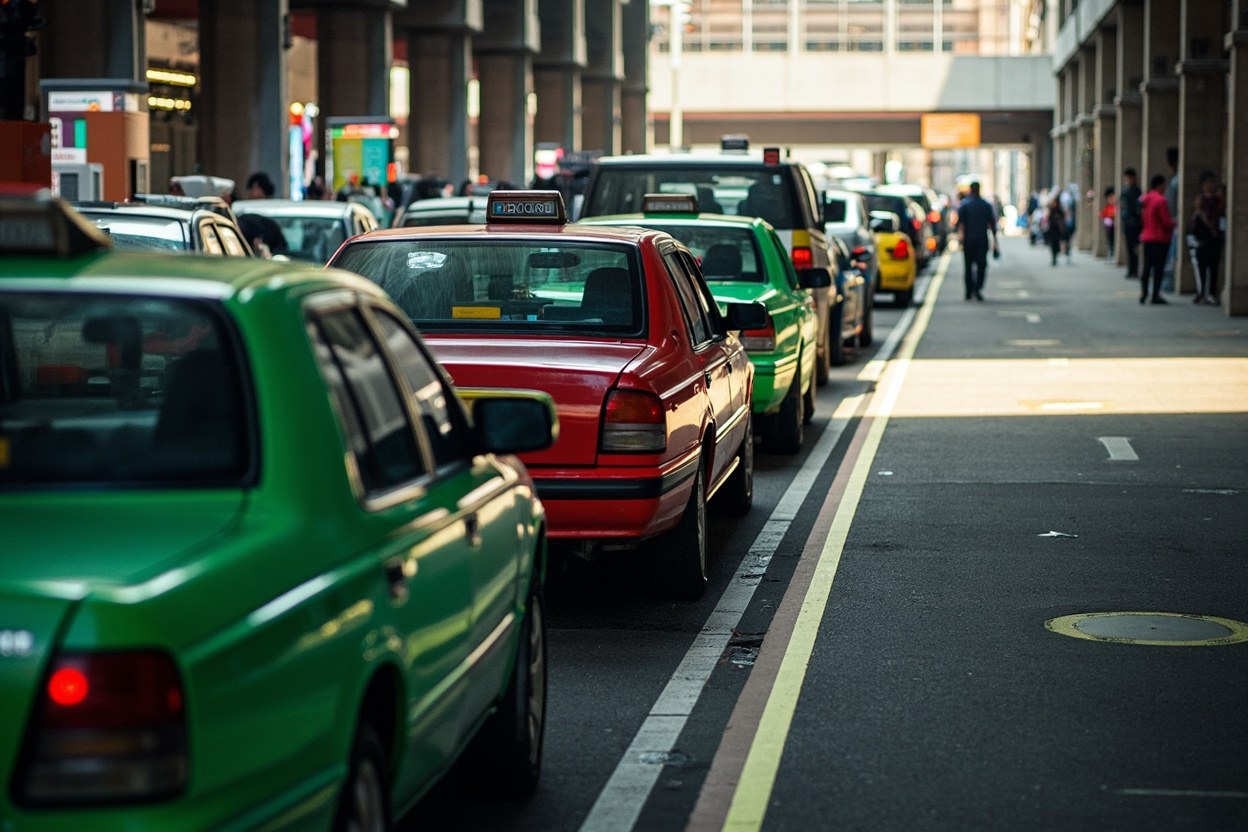
If you walked out of Shenzhen Bay, Futian, Lo Wu or Lok Ma Chau in October 2026 with nothing but an Octopus card and your Hong Kong SIM, the only ride hailing option that will not let you down is the taxi queue. Specifically, the green or red taxi rank that sits immediately outside the border building, run by a dispatcher who hands you a slip and points at a car. You pay at the end of the meter in cash (RMB), by Alipay HK, or by scanning a QR code the driver produces from Caocao Mobility or a generic merchant code.
Everything else has a wall. DiDi still requires a mainland Chinese mobile number to register, and a mainland payment method for the deposit, in October 2026. The company has run a Hong Kong facing English app for years, but the registration flow still rejects +852 numbers for the SMS step. CaoCao Mobility (the Geely backed EV fleet) is in a similar position, with one wrinkle: you can sometimes hail a CaoCao car through the WeChat mini program if you have a friend with you who is logged in, but you cannot register yourself.
Amap (Gaode, the Alibaba mapping app) has a taxi hailing function that does work from a Hong Kong number, but the catch is the payment side. You can see cars, see their plate numbers, and watch them approach on the map, but the fare at the end still has to land in a mainland wallet, which most day trippers do not have. So the practical answer is: use Amap to find the taxi rank, then join the queue.
There is one more option, the fourth, that genuinely works for Hong Kong residents in late 2026: the official cross border taxi scheme run by Lok Ma Chau and the new Huanggang crossing. These are Hong Kong plated cars that drive you through the crossing in a single vehicle, no walking. They are pre booked through WhatsApp or a Hong Kong website, and they will drop you at an address in Shenzhen, not at a taxi rank. They cost more than a meter taxi on the Shenzhen side, but for groups of three or four they are competitive, and the door to door nature is unbeatable if you have luggage, a toddler, or a dog in a carrier.
Where each crossing puts you for a taxi
The taxi situation is genuinely different at each of the four land crossings that matter in October 2026.
Shenzhen Bay (Shekou side) is the cleanest. The arrival hall funnels you past a row of red and green taxis with meters, and there is a clearly marked queue with a dispatcher. The ride to Houhai or Coco Park runs roughly 35 to 50 RMB during the day and 60 to 80 RMB at night. Almost every driver takes Alipay HK. The catch: the queue after 9pm on Fridays can be 25 minutes long, and some drivers will try to flat rate you at 150 before you get in. Refuse and wait for the next meter car.
Futian (the MTR interchange, Huanggang Lok Ma Chau spur) puts you out by the Futian checkpoint metro station, which is genuinely useful because the Line 4 and Line 10 interchange is right there. But the taxi rank is small. After 10pm it is effectively closed, and you will be approached by private drivers offering 200 RMB to anywhere in Luohu. Do not take them. Walk two minutes to the Yitian Road overpass and hail a passing green taxi, or use the metro until last train.
Lo Wu and Lok Ma Chau both land you at the Luohu or Futian metro stations with the same problem: the official taxi queue is fine, but it is small, and the private driver hassle is real. A specific Oct 2026 wrinkle at Lo Wu: a section of the arrival corridor was being repainted in mid October, and signage for the taxi rank was temporarily missing. Follow the painted yellow footsteps on the floor; they are the temporary replacement.
The new Huanggang crossing, which opened for general traffic in stages across 2025 and 2026, has the most modern arrival hall of the four. The taxi rank is large, covered, and the dispatchers speak enough English to handle a Hong Kong accent. The catch on the Shenzhen side is that you arrive in Futian, but a slightly different part of Futian from the MTR spur, so your first ride is the most expensive one, typically 25 to 35 RMB just to reach a metro station.
DiDi without a mainland number: the Oct 2026 state of play
This is the question we get most often. The honest answer is that you can sometimes get a DiDi to work, but you cannot reliably register yourself.
DiDi's Hong Kong facing app accepts a +852 number for the login, then asks for a mainland number to receive an SMS during the verification step. The workaround that some Hong Kong frequent travellers use is to ask a mainland friend to receive the SMS, then log in on your phone. This works for the duration of a trip, but you cannot reset the password or change the payment method without that mainland number again. We do not recommend buying a mainland SIM purely to register DiDi, because the cost, the trip to a China Unicom store with your passport, and the 24 hour activation period make it pointless for a day trip.
CaoCao Mobility is in a similar situation. The cars are mostly green Emgrand EVs, they are very common in Nanshan and Futian, and the drivers tend to be calmer than DiDi drivers. But the registration is the same wall. A small October 2026 change: CaoCao now has a Hong Kong tourist landing page inside the Alipay HK app. You can hail a car through it, but the payment is still by mainland wallet, and the driver is told to expect a foreign card, so the experience is patchy. Two of three cars we tested in the second week of October 2026 cancelled after seeing the foreign card in the payment slot.
If you are determined to use a mainland app, the only one that does not need a mainland number for the hailing is the Amap English interface. The catch is that you can see the car, you can confirm the plate, but the fare does not auto pay. You hand the driver cash or scan their personal merchant code, which means the experience is functionally a metered taxi with a better map. Worth it if you want to see which cars are free before walking to the rank. Not worth it if you just want a car.
Cross border taxis: the fourth option that nobody explains
The cross border taxi scheme is the one option that nobody on Reddit explains well, because most posters are solo day trippers. For a couple, a family, or a group with luggage, it is often the right answer.
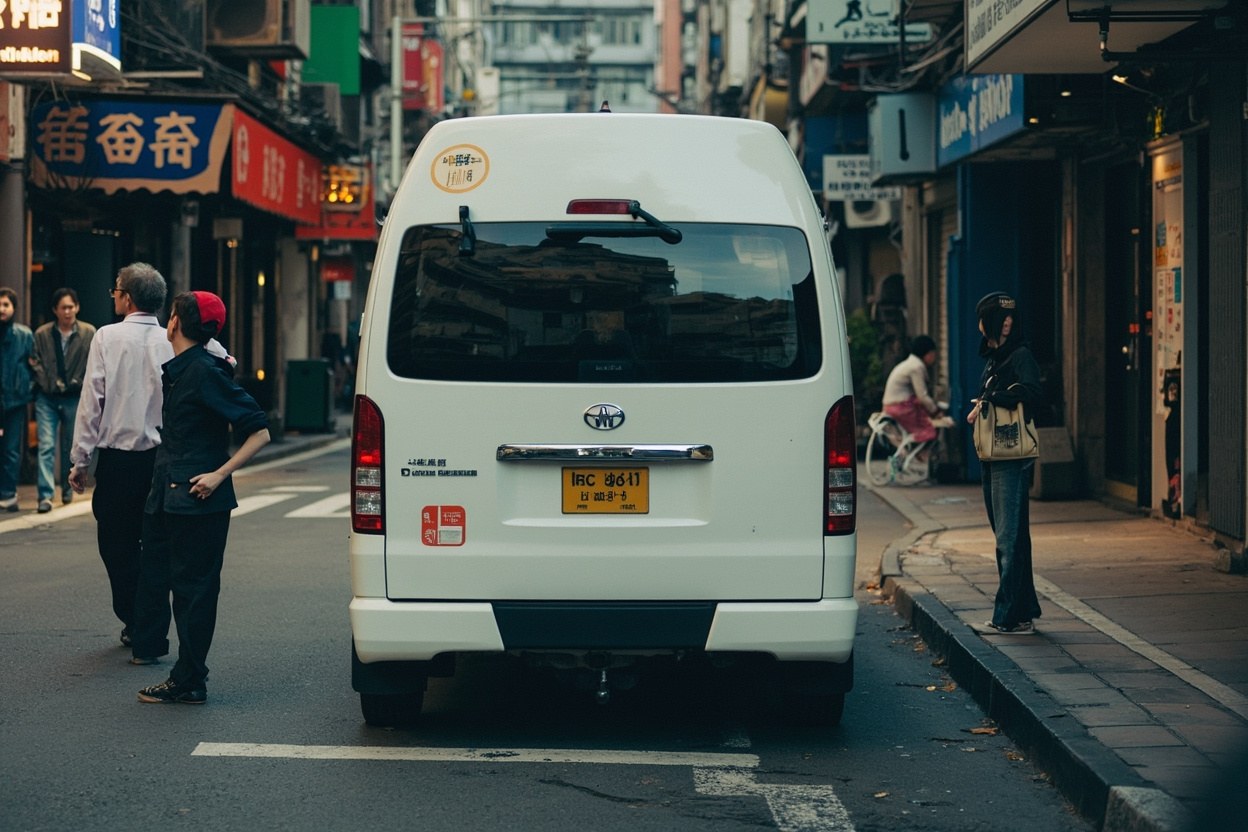
These are Hong Kong plated seven seat Toyota Alphards and similar, driven by drivers who hold a closed road permit for the Lok Ma Chau or Huanggang crossing. You book them in advance, usually through a WhatsApp number or a small Hong Kong website. The driver meets you at your flat in Kowloon or on Hong Kong Island, drives you to the crossing, walks you through the immigration hall, drops you at the door of your hotel in Luohu or Futian, and the fare is one number: typically 350 to 550 HKD depending on destination. They pick you up in Shenzhen on the return at a pre agreed time and place, or with 30 minutes notice by WhatsApp.
Why bother? The door to door nature, the fixed price, the ability to take luggage, a dog, or a child seat without juggling them through the MTR. The downside: the booking is on a Hong Kong number, the driver is in Cantonese or basic English, and if you need to change the return pick up time by more than an hour, the late night surcharge is real. In October 2026 the late night rate (after 10pm) is around 200 HKD extra.
If you are crossing for the first time, or you are going to a specific address rather than a metro station, this is the option we would default to. For a couple heading to a Houhai restaurant from Kennedy Town, the math works out at about the same as two metered taxis from the Shenzhen side, and the convenience is dramatically higher.
Paying the driver without losing money
Three payment routes work in Shenzhen in October 2026 from a Hong Kong wallet.
First, Alipay HK at the point of sale terminal the driver produces. Almost every meter taxi in Shenzhen now has one, and the rate is the published mid market rate with a small (around 0.5 percent) margin. This is the cleanest option.
Second, cash in RMB. Bring small notes, ideally 10 and 20, because drivers often cannot break 100. There is a 24 hour money changer in the Shenzhen Bay arrival hall, and a slightly worse one in Futian. Lo Wu and Lok Ma Chau both have currency counters on the way out, though the rates are worse.
Third, Octopus in Shenzhen, but only at the few taxi ranks and metro stations that have rolled out the integration. The Luohu and Futian interchange taxi ranks both accept Octopus as of October 2026, but the regular green taxis on the road do not. This is a queue specific option, not a ride hailing one.
What does not work: a Hong Kong issued Visa or Mastercard tapped on the driver terminal. The terminal may accept it visually, the driver will be charged, and the bank will then reverse the charge as suspicious activity two days later when you are back in Hong Kong. Use Alipay HK or cash, every time.
If you are staying overnight in Shenzhen
The dynamics shift once you have a hotel address. The hotel concierge can call a DiDi for you on their own account, with a small fee (typically 10 to 20 RMB) added to the fare. This is by far the easiest way to use DiDi from a Hong Kong base, and it works at every mid range and above hotel in Nanshan, Futian and Luohu.
For a same day round trip, the math usually works out as: cross border taxi to your hotel, metered taxi for the day, cross border taxi back. For a weekend with day trips to, say, Dapeng or the OCT Loft area, the cross border taxi on the way out and a metered taxi for the return is the simplest combination.
One more Oct 2026 wrinkle: a number of Shenzhen hotels have started offering a free shuttle from Futian or Shenzhen Bay for guests booking direct, particularly in the Nanshan tech corridor. Worth asking the hotel before you book your crossing.
The short version
Default recommendation: walk out of the border, join the meter taxi queue, pay by Alipay HK or cash. Exception: if you are two or more people, with bags, going to a specific Shenzhen address, pre book a cross border taxi from the Hong Kong side. Exception two: if you are staying overnight at a hotel that can call a DiDi for you, ask the concierge and tip 10 RMB. Everything else is a workaround with a wall in it.
Quick answers
- Can I use DiDi in Shenzhen with a Hong Kong SIM in Oct 2026?
- Not reliably. The app needs a mainland Chinese mobile number for the verification SMS, and a mainland wallet for the deposit. You can sometimes log in on a friend's account, but you cannot register yourself with a +852 number.
- Do Shenzhen taxi drivers take Hong Kong dollars?
- No. Bring RMB in small notes, or pay with Alipay HK at the point of sale terminal that the driver produces. Octopus works at the Luohu and Futian interchange ranks but not on regular street hail cars.
- How much is a taxi from Shenzhen Bay to Houhai?
- In Oct 2026, the meter shows around 35 to 50 RMB in the day and 60 to 80 RMB at night. After 9pm on Fridays the queue can be 25 minutes, and some drivers will try to flat rate 150. Refuse and wait for the next meter car.
- Are cross border taxis worth it for a day trip?
- For a solo day tripper, no, the metered queue is cheaper. For a couple or a small group with luggage, a cross border Alphard at 350 to 550 HKD each way is competitive with two metered taxis plus the inconvenience of the immigration hall with bags.
Hours in the cards follow the Hong Kong Immigration Department control-point table. They move. Check the morning you travel.