Crossing
Shenzhen pet quarantine from Hong Kong: Oct 2026
Updated 6 October 2026
There are now three ways to bring a dog or cat from Hong Kong into Shenzhen in October 2026, and the right one depends on whether the animal is travelling with you, coming back home after a stay across the border, or arriving on a relocation truck. The border reopened the animal channel on 14 October with a new digital system, and the old paper route has been thinned out to almost nothing.
What changed on 14 October 2026
Shenzhen Customs rolled out a unified digital platform for companion animals on 14 October 2026, replacing the patchwork of paper booklets, vet stamps and on-the-spot inspections that had been in place at Huanggang, Futian and Shenzhen Bay since 2019. The new system, called the Guangdong Companion Animal Entry Platform (GCAEP), sits behind a WeChat mini program and is the only way to get an appointment slot at one of the city's three animal inspection rooms.
Until September, a Hong Kong owner could walk a dog across Huanggang with a blue health booklet, a rabies titre test from a designated lab, and a microchip that matched the paperwork. From 14 October that route is gone. The booklet is still issued by the city's designated vets, but it is now a supporting document for a digital certificate rather than the main one.
Customs says the change is about traceability after a spike in falsified paper certificates in mid 2026. The platform logs the issuing vet, the lab that ran the titre, the chip number and a photo of the animal taken at the time of the certificate. A second photo is taken at the border. If the two photos do not match at a basic facial recognition level, the entry is refused.
For most Hong Kong residents, the practical effect is one extra appointment and a longer lead time. A weekend crossing now needs planning at least three weeks ahead, not three days.
The three routes that actually work in Oct 2026
Route one: day trip with no animal. Nothing changes. You cross, you shop, you come back. Your dog stays in Hong Kong with a sitter, a friend, or in a Kennedy Town boarding kennel that costs roughly HK$280 a night for a small breed. This is by far the most common case and the only one where the new rules do not bite.
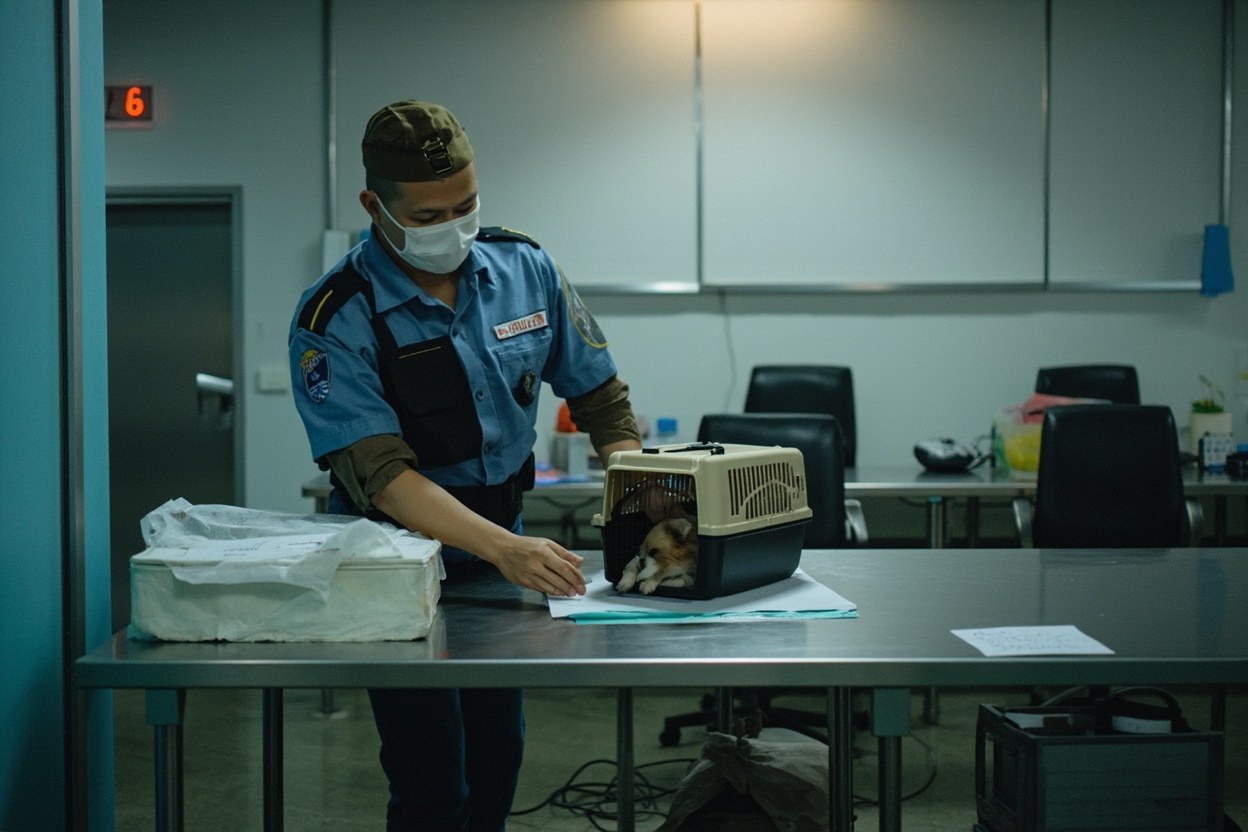
Route two: pet travelling with you, short stay in Shenzhen. This is the new middle path that the digital system was designed for. You book a slot at the Shekou Animal Inspection Room, the Luohu Companion Animal Hall, or the new Longgang facility that opened on 1 October. You arrive with the animal, the digital certificate, the paper booklet, and a carrier that meets the size rules. The whole process takes 40 to 70 minutes if your paperwork is clean. It used to take 20.
Route three: relocation or long stay. The animal goes through a 30 day quarantine at the new Longgang facility, regardless of origin country, if you are moving household goods across the border. Hong Kong is not on the list of countries with a shortened 7 day quarantine, which surprises a lot of people. The old rule treated the city as low risk. The new rule treats every entry into Guangdong as a 30 day stay unless the animal is leaving within 14 days.
There is a fourth route that does not work any more, and it is worth naming because a lot of older guides still recommend it. Driving a dog across in the back seat of a private car, with the paperwork waved through at a side lane, is not available. The side lane was closed on 30 September 2026 and the staff redeployed to the main inspection rooms.
The 14 day digital certificate, step by step
Step one: microchip. The chip must be ISO 11784 or 11785 compliant. Most Hong Kong vets use compliant chips as standard, but chips implanted before 2017 sometimes use the older FDXB protocol, which the GCAEP system reads but flags. If your dog was chipped before 2017, get the chip number reissued by your vet before you book anything else.
Step two: rabies vaccination. The animal must have a valid rabies vaccine, given at least 30 days before entry and not more than 12 months before. Puppies under 4 months are refused entry. There is no exception for the day trip rule because the certificate itself cannot be issued for an animal under 4 months.
Step three: rabies titre test. Blood is drawn at a designated Shenzhen side lab. The list of labs is on the GCAEP mini program. Hong Kong side labs are not accepted as the issuing lab, but a Hong Kong vet can take the blood and ship it under cold chain. The result takes 7 to 10 working days.
Step four: the digital certificate. A designated Shenzhen vet logs into GCAEP, attaches the titre result, the chip number, the vaccine record, and two photos. The certificate is valid for 14 days from the issue date. After that it expires and you start again.
Step five: appointment booking. The mini program opens booking slots 21 days in advance. Friday and Saturday slots go in about 4 hours. Sunday slots last about 12 hours. If you are flexible on weekday mornings, you can usually find something 7 to 10 days out.
Step six: the crossing. At the border, you go to the animal inspection room, not the general passenger lane. At Huanggang the animal room is on the second floor of the new east wing, past the duty free zone. You scan the digital certificate QR code, the officer takes a fresh photo of the animal, and the system compares. If it matches, you get a 14 day entry stamp in the booklet and you are through.
Where the three inspection rooms actually are
Shekou Animal Inspection Room is inside the Shekou Passenger Terminal, 200 metres from the ferry pier. It serves ferry arrivals from Hong Kong and Macau and the new Shekou to Zhuhai route. Opening hours are 09:00 to 19:00, seven days a week. It is the easiest of the three to reach from Central or Wan Chai on the TurboJET or Chu Kong ferries.
Luohu Companion Animal Hall is on the third floor of the Luohu Port rebuild, above the new east exit. It serves the Luohu MTR crossing and the Luohu pedestrian bridge. Opening hours are 08:00 to 20:00. This is the room most Hong Kong day trippers will use if they are crossing by MTR or on the new B12 bus from the Shenzhen side.
Longgang Companion Animal Quarantine Centre is a new build at Longgang Boulevard, about 25 minutes by taxi from the Huanle Mountain crossing point. It is the only one of the three that does the 30 day quarantine stay. It also handles entry for animals that fail the photo match, as a holding site while the case is reviewed. Opening hours for entry are 09:00 to 17:00, Monday to Saturday.
If you are coming over from the new Heung Yuen Wai control point on the Hong Kong side, the closest inspection room is actually the Luohu one, because the cross border coach terminates at Luohu. There is no animal room at Heung Yuen Wai itself. Plan a 40 minute onward journey.
Cost, in Hong Kong and renminbi
The digital certificate costs RMB 180 at the issuing vet. The rabies titre test costs RMB 320 at a designated lab. The border inspection fee is RMB 50, paid inside the GCAEP mini program before you cross. The 30 day quarantine stay at Longgang costs RMB 95 a day for a small dog or cat, RMB 140 a day for a medium dog, and RMB 220 a day for a large dog, with a non refundable intake fee of RMB 400.
On the Hong Kong side, a vet visit to confirm the chip and pull blood for the titre is typically HK$450 to HK$900 depending on the clinic. The cold chain shipment to a Shenzhen lab is HK$220 to HK$380, booked through a third party courier. The total cost of a clean short stay entry in October 2026 is roughly HK$2,800 to HK$4,200 if you do everything privately, or RMB 600 if you do the Shenzhen side steps only and your Hong Kong vet is happy to draw blood without a full consultation fee.
None of this is refundable if the animal is refused entry. The most common refusal reason in the first three weeks of the new system was a photo mismatch, where the dog had been shaved, groomed, or had put on weight between the certificate photo and the border photo. Customs is now telling owners to take the certificate photo within 48 hours of the crossing.
What about a day trip where the pet walks across with you
This is the question the inbox gets most often, and the honest answer is that it does not work any more. The GCAEP system does not have a day trip exemption. A dog or cat walking across the border with an owner who is only staying in Shenzhen for a few hours still needs the full digital certificate, the titre test, and an appointment at one of the three inspection rooms. The old system had a verbal exemption that customs officers applied at their discretion. That exemption is gone.
If you want to take your dog to a Shenzhen vet, a Shenzhen groomer, or a Shenzhen dog park for a half day, the entry stamp in the booklet is valid for 14 days. You can do multiple crossings inside that window on the same certificate, but each crossing still needs an appointment slot. The slots are per animal per crossing, not per certificate.
The most common workaround is to leave the pet in Hong Kong. The second most common is to drive to Zhuhai instead, where the older paper system is still in place at the Gongbei crossing. Zhuhai is a longer trip from Hong Kong, but for owners who want to take a small dog to a mainland vet for a single consultation, it is still the cheaper and faster option in October 2026.
Common questions Hong Kong owners actually ask
Can I use a paper booklet from a Hong Kong vet without the digital certificate? No. The booklet is a supporting document only. Customs will turn you back if the QR code in GCAEP does not scan.
My pet was issued a digital certificate in September, before the new rules. Does it still work? Only if it was issued after 14 September 2026. Anything earlier is void and the certificate fee is not refundable.
What happens if the photo does not match? The animal is held at the inspection room for up to 4 hours while the case is reviewed. If the review fails, the animal goes to the Longgang quarantine centre for the standard 30 day stay. There is no same day appeal.
Is there a faster route for guide dogs or service animals? Yes. The three inspection rooms have a service animal lane that does not require an appointment, but it does require the digital certificate, the titre test, and a current Hong Kong guide dog identity card. The lane opens from 08:00 to 10:00 every morning.
Can I bring a puppy under 4 months? No. The certificate cannot be issued for an animal under 4 months because the rabies vaccine cannot be given before 12 weeks. Puppies and kittens stay in Hong Kong until they are old enough.
Practical timing for an October 2026 crossing
If you want to cross with a pet in the second half of October, the booking slots open on 7 October at 09:00 Shenzhen time. Friday 24 October and Saturday 31 October slots will go inside two hours. Weekday slots are easier but mean a day off work for most Hong Kong owners.
The fastest end to end process right now is to draw blood at a Hong Kong vet on a Monday, ship the sample on a Tuesday, get the titre result on the following Monday, see a Shenzhen vet for the digital certificate on the Wednesday, and cross on the Friday. That is ten working days from the first vet visit to the crossing, which is the realistic minimum in October 2026.
For anyone thinking of crossing in November, the lead time will probably stretch as more owners try the new system. Customs has hinted at a second wave of changes in early 2027 that would push the certificate validity down to 7 days. Nothing is confirmed, but it is worth planning a long stay entry before the end of the year if you can.
Quick answers
- Do I need the digital certificate if I am only going to Shenzhen for a few hours?
- Yes. The old day trip exemption is gone. Every entry into Shenzhen with a dog or cat needs a valid GCAEP digital certificate and an appointment at one of the three animal inspection rooms.
- How long is the digital certificate valid for?
- Fourteen days from the issue date. Customs is reviewing whether to shorten it to 7 days in early 2027.
- Can I still cross at Huanggang with my dog?
- Only through the Luohu Companion Animal Hall on the third floor of the Luohu Port rebuild. The old side lane at Huanggang closed on 30 September 2026.
- What is the cheapest way to do the Shenzhen side steps?
- Use a Shenzhen side vet that is on the GCAEP list and book the titre test at one of the designated labs. The full Shenzhen side process costs around RMB 600, compared to HK$2,800 to HK$4,200 if you pay a Hong Kong clinic to manage the cold chain for you.
Hours in the cards follow the Hong Kong Immigration Department control-point table. They move. Check the morning you travel.