Once across
Shenzhen from Hong Kong without cash: 2026 payment guide
Updated 6 October 2026
There are about four ways to pay in Shenzhen from Hong Kong right now, and the right one depends on whether you are catching a Shenzhen Metro, paying at a Shenzhen Sam's Club till, hopping a Shenzhen Bao'an Airport coach, or simply buying a bottle of water from a kiosk. Here is what genuinely works in October 2026, what to set up on the Hong Kong side before you go, and which combinations cover 90 percent of day trips.
Set up WeChat Pay HK before you cross
For most Hong Kong day trippers going across the border in October 2026, WeChat Pay HK remains the most useful single wallet. The app binds to a Hong Kong credit or debit card from HSBC, Hang Seng, Standard Chartered, BOC HK, ZA Bank, Mox, livi, or AlipayHK's sister services, and the cashier scans a QR code generated on your phone. Most Shenzhen Sam's Club tills accept it, as do chain convenience stores (7-Eleven, Lawson, FamilyMart), hotpot chains, and the bulk of shopping mall retailers in Luohu, Futian, and Nanshan.
The catch is registration. Hong Kong Identity Card verification usually takes a day or two for first-time users, so do not leave it until you are standing at the till. Top up from a linked bank card or by FPS from your Hong Kong account, exchange rate is set by TenPay on the day, and you will pay a 2.5 percent currency conversion on the HKD side. Single-transaction limit is 38,000 HKD and 50,000 HKD per day as of mid 2026, more than enough for a Shenzhen weekend. A practical sequence: install the app on Hong Kong Wi-Fi, complete HKID upload, wait for the green tick by the next morning, then add a Visa or Mastercard and test a 10 HKD top up at a 7-Eleven in Sheung Wan before you board the MTR to Lo Wu. If the test top up lands cleanly, your weekend spending will sail through.

Octopus still works in some places
Despite rumour, the Octopus card is not dead in Shenzhen. Two specific uses are still reliable in October 2026.
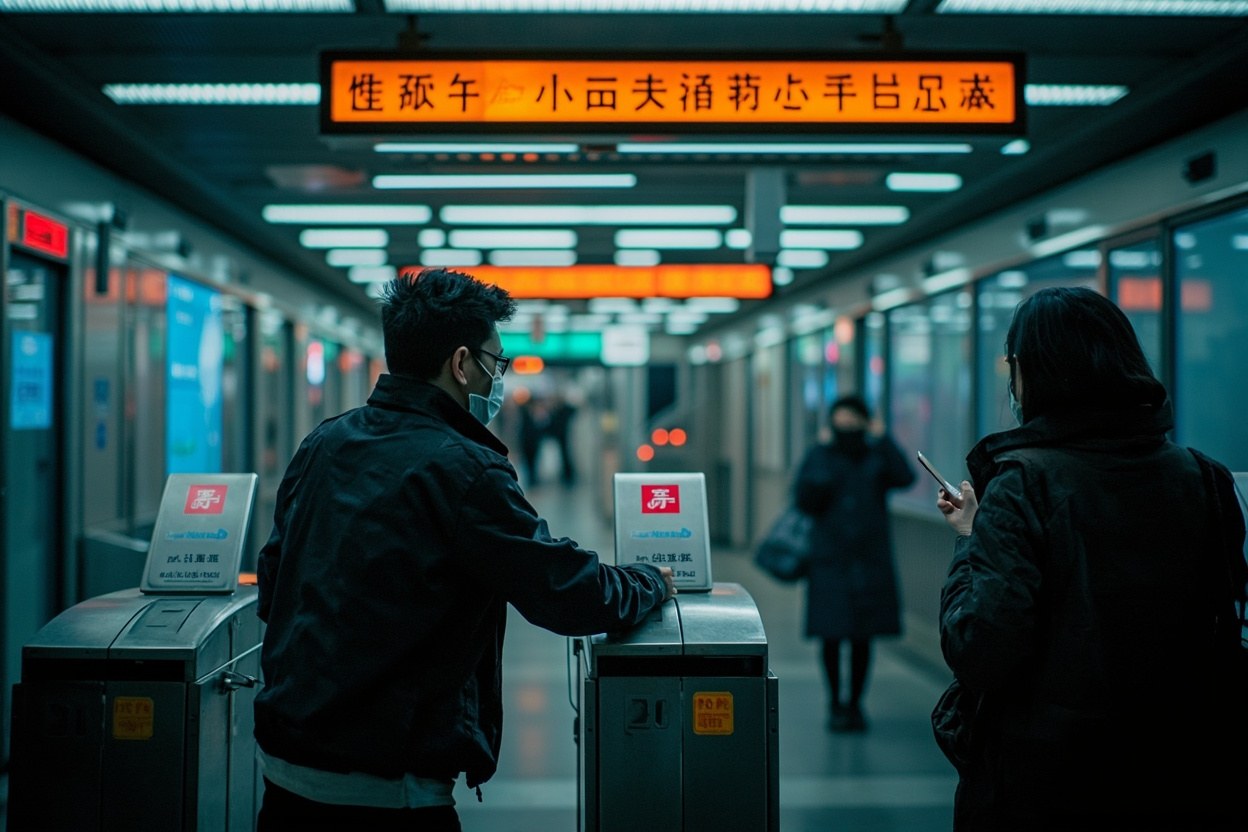
First, the Shenzhen Metro. The whole network, from Luohu line 1 through to the new Line 16 extensions into eastern Longgang, still takes an Octopus card with a UnionPay chip on the back. The older blue Octopus only is being read less and less reliably at gate readers built in the last 18 months, so carry a newer card and tap rather than placing it on the reader. Second, some Shenzhen Bao'an Airport to Hong Kong coach operators, including the China Travel Service CTS counter, still prefer Octopus if you buy at the ticket desk. The gate readers at older stations such as Luohu, Futian, and Shaoniangong tend to be more forgiving than the shiny new interchange gates at Chegongmiao or the airport extension, where UnionPay on Octopus is the only reliable route.
What does not work any more: most Shenzhen taxis, most Shenzhen Sam's Club registers, most wet market stalls. The Shenzhen Metro is the one place where Octopus is genuinely still a primary payment tool from a Hong Kong resident.
AlipayHK, UnionPay, and the rest
AlipayHK works at the same merchants as WeChat Pay HK, and the dual-binding feature in 2026 means many tills display one or both. The exchange rates are within a few basis points of each other on a normal day, so the choice comes down to which app your Hong Kong bank card links cleanly. BOC HK and ZA Bank users tend to have the smoothest WeChat Pay HK path, while HSBC and Standard Chartered users report fewer AlipayHK re-verification prompts. A worked example: a 248 HKD hotpot bill at Hai Di Lao in Coco Park converts at the WeChat Pay HK rate of 1.1074 on the day, so the merchant receives about 224 RMB and you are charged 254.20 HKD, of which 6.20 HKD is the 2.5 percent FX spread layered on top of the published rate.
For larger purchases, a UnionPay credit card from Hong Kong is accepted almost everywhere a Chinese debit card is, including high-end restaurants, hotel lobbies, and Bao'an Airport duty free. The conversion fee of 1 percent on most Hong Kong UnionPay cards is lower than the 2.5 percent on the wallets, so a Hilton Shenzhen or a big-ticket electronics shop in Huaqiangbei can be cheaper to pay by tapping the physical card. A 12,000 RMB camera body at Huaqiangbei works out to roughly 13,300 HKD on UnionPay against 13,635 HKD on a wallet, a saving of around 330 HKD that justifies carrying the plastic for a serious shopping run.
What still needs cash
Shenzhen wet markets, hole-in-the-wall noodle shops, some taxi drivers, and a stubborn 5 percent of street vendors still expect RMB. A few hundred HKD exchanged at a Hong Kong money changer before you cross, or at the licensed booths inside the Lo Wu or Lok Ma Chau arrival hall, will cover the gap. Avoid airport kiosks, the rate is poor. Keep the change, you can use it on the way back. The licensed money changers in Sheung Wan and Mong Kok typically sit within ten basis points of the mid-market rate, while the arrival hall booths in Lo Wu tend to be 30 to 50 basis points wider, and the airport counters in Chek Lap Kok are routinely 80 to 100 basis points wider still. For a 500 HKD exchange, that spread is the difference between roughly 451 RMB and 442 RMB, enough to cover a couple of wet market meals.
B12 to Huanggang: the new wrinkle
The B12 cross-boundary bus from Huanggang Port to Longhua and Bao'an District stops, launched in March 2026 and expanded in late September, is interesting because fares are paid in HKD on the Hong Kong side and RMB on the Shenzhen side, and the onboard ticket machine is one of the few places that will not take Octopus. Set up WeChat Pay HK or have the exact RMB in small notes for a B12 trip starting from Huanggang. The Shenzhen side fare from Huanggang to Longhua sits at 8 RMB, and the driver does not give change, so a handful of 1 RMB coins and a couple of 5 RMB notes will keep the queue behind you moving. The September expansion added two new evening departures from Huanggang at 19:40 and 21:10, useful for late returns when the Lok Ma Chau shuttle has thinned out.
Frequently asked
Most day trippers only need WeChat Pay HK and a little RMB. Anything beyond that is a hedge.
Quick answers
- Can I use my Octopus in Shenzhen at all?
- Yes, the Shenzhen Metro still takes Octopus if your card has a UnionPay chip, and a few airport coach counters do too. Beyond that, Octopus coverage in Shenzhen is patchy in 2026.
- Is WeChat Pay HK the same as mainland WeChat Pay?
- No. Mainland WeChat Pay requires a Chinese bank card and a mainland phone number. WeChat Pay HK links to a Hong Kong card and is the legal way for HK residents to use the WeChat network in Shenzhen.
- Do I need RMB cash at all?
- A small amount, around 200 to 300 HKD worth, is sensible. Wet markets, some taxis, and a few B12 bus onboard ticket machines will not take a Hong Kong wallet.
Hours in the cards follow the Hong Kong Immigration Department control-point table. They move. Check the morning you travel.